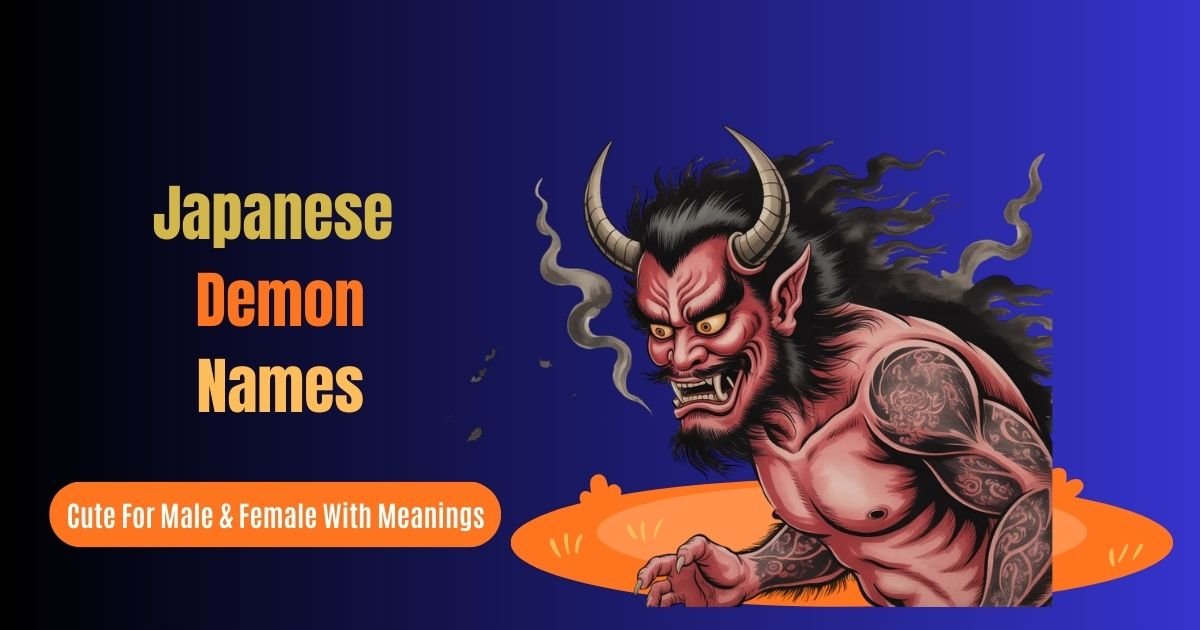

Ever wondered what lurks in Japan’s shadowy folklore? Japanese demon names carry centuries of storytelling, blending terror with beauty in ways Western mythology rarely achieves. From the fierce oni guarding mountain passes to the enchanting Yuki-onna haunting snowy landscapes, these supernatural beings represent far more than simple monsters.
I’ve compiled 500 authentic Japanese demon names spanning legendary entities, mythical monsters, and spirits of Japan. Whether you’re crafting anime characters, writing fantasy stories, or simply fascinated by yokai legends, you’ll discover names that resonate with power, mystery, and cultural depth.
Let’s dive into this comprehensive guide to Japanese demon folklore.
Japanese Demon Names Male
Male demons in Japanese mythology often embody raw power and untamed chaos. These warrior spirits command respect through their fierce reputations.
Powerful Oni Names for Boys
Shuten Dōji stands as perhaps the most infamous male demon in Japanese folklore. This legendary oni ruled Mount Ōe, terrorizing Kyoto until the warrior Minamoto no Yorimitsu defeated him. His name literally means “little drunkard,” reflecting his legendary sake consumption.
Ibaraki Dōji served as Shuten Dōji’s right hand. Unlike his master, Ibaraki survived their encounter with Yorimitsu but lost an arm in the process. His name connects to the Ibaraki region, though legends place his activities near the Rashomon gate.
Here’s a comprehensive table of powerful male demon names:
| Name | Meaning | Type | Characteristics |
|---|---|---|---|
| Raijin | Thunder God | Deity | Controls storms and lightning |
| Enma | King of Hell | Judge | Rules the underworld |
| Gozu | Ox-Head | Guardian | Protects hell’s gates |
| Mezu | Horse-Head | Guardian | Partners with Gozu |
| Ashura | War Demon | Fighter | Represents conflict |
| Fudo Myo-o | Immovable King | Protector | Fierce wisdom deity |
| Tengu | Mountain Goblin | Trickster | Bird-like warrior |
| Nurarihyon | Slippery Demon Lord | Leader | Commands yokai |
| Gashadokuro | Starving Skeleton | Giant | Formed from war victims |
| Onimaru | Demon Circle | Warrior | Legendary sword spirit |
Dark Thunder and Shadow Names
Raijin, the god of thunder, creates storms by beating massive drums. Artists typically portray him with red skin, wild hair, and a demonic grin. Despite his fearsome appearance, he’s not inherently evil—nature itself cares nothing for human morality.
Kazekuro combines “wind” (kaze) and “black” (kuro). This modern name works beautifully for dark aesthetic characters who manipulate shadows and storms.
Additional male demon names:
- Kurojin (Black Spirit)
- Yamairo (Mountain Path)
- Rokuro (Sixth Son)
- Makatsu (True Victory)
- Tsukikage (Moon Shadow)
- Daigo (Great Enlightenment)
- Kazan (Fire Mountain)
- Aragami (Wild God)
- Inugami (Dog Spirit)
- Kogarasumaru (Little Crow)
- Moguro (Dark Black)
- Rengoku (Purgatory)
- Tsubakiro (Camellia Black)
- Hibakusha (Explosion Survivor)
- Kurayami (Darkness)
- Raigo (Thunder Protection)
- Seiryu (Azure Dragon)
- Byakuro (White Black)
- Hozuki (Winter Cherry)
- Raito (Thunder Sound)
Japanese Demon Names Female
Female demons in Japanese folklore often prove more dangerous than their male counterparts. These onna yokai use beauty as camouflage for deadly intentions.
Vengeful and Beautiful Spirit Women
Hannya represents a woman consumed by jealousy. The famous Noh mask shows her transformation—still partially human but with growing horns and sharpening teeth. She embodies how intense emotions can corrupt the soul.
Yuki-onna, the snow woman, appears on winter nights. She’s breathtakingly beautiful with porcelain skin and flowing white robes. Some legends paint her as merciful; others describe her freezing travelers to death with her icy breath.
Kiyohime began as a young woman who fell desperately in love with a monk. When he rejected her, her passion transformed her into a serpent demon who pursued him relentlessly. She eventually burned him alive while he hid inside a temple bell.
| Name | Meaning | Type | Notable Feature |
|---|---|---|---|
| Tamamo-no-Mae | Before the Jewel | Fox Spirit | Nine-tailed beauty |
| Jorōgumo | Whore Spider | Shape-shifter | Spider-woman hybrid |
| Futakuchi-onna | Two-Mouthed Woman | Cursed Being | Second mouth on skull |
| Rokurokubi | Long-Neck | Yokai | Stretching neck |
| Ubume | Birthing Woman | Ghost | Died in childbirth |
| Nure-onna | Wet Woman | Serpent | Snake body, woman head |
| Ameonna | Rain Woman | Weather Spirit | Brings endless rain |
| Aoandon | Blue Lantern | Story Spirit | Born from ghost stories |
| Iso-onna | Beach Woman | Coastal Demon | Lures fishermen |
| Onibaba | Demon Hag | Witch | Ancient evil woman |
Enchanting Yet Deadly Names
More female demon names:
- Umehara (Plum Field)
- Mizuki (Beautiful Moon)
- Ayakashi (Strange Phenomenon)
- Oiwa (Great Rock)
- Hanako (Flower Child)
- Suzuhime (Bell Princess)
- Ranmarina (Orchid Marine)
- Akane (Deep Red)
- Yugiri (Evening Mist)
- Sayo (Small Night)
- Tsukiyo (Moon Night)
- Megumi (Blessing)
- Kurohana (Black Flower)
- Yumeko (Dream Child)
- Hoshiko (Star Child)
- Amai (Sweet)
- Kurohime (Black Princess)
- Kageri (Shadow)
- Murasaki (Purple)
- Sumire (Violet)
- Enkiko (Flame Tree Child)
- Aika (Love Song)
- Shion (Aster)
- Natsuko (Summer Child)
- Riko (Jasmine Child)
Japanese Demon Names and Meanings
Understanding the kanji meanings behind demon names reveals layers of cultural significance. Each character tells a story.
Breaking Down Name Components
Oni (鬼) itself means “demon” or “ogre.” But the character originally depicted a spirit of the dead. Over centuries, it evolved to represent fierce supernatural beings with horns, wild hair, and incredible strength.
Yokai (妖怪) combines “bewitching” (yō) with “mystery” (kai). These supernatural beings occupy a broader category than oni, including everything from mischievous spirits to terrifying monsters.
Important name meanings:
- Raiden (雷電): Thunder (rai) + Lightning (den)
- Yukiro (雪狼): Snow (yuki) + Wolf (ro)
- Kurozai (黒罪): Black (kuro) + Sin (zai)
- Hanezu (朱): Deep crimson color
- Guren (紅蓮): Crimson lotus
- Yamikaze (闇風): Dark (yami) + Wind (kaze)
Nature and Elemental Meanings
Japanese demon names frequently reference natural elements. This reflects Shinto beliefs about spirits inhabiting all aspects of nature.
50 more names with meanings:
- Tenro (Heavenly Wolf)
- Hikariro (Light Wolf)
- Soryu (Blue Dragon)
- Enshiro (Flame Castle)
- Tsubakuro (Swift Swallow)
- Zetsuya (Severing Night)
- Shinrai (Trust)
- Hoshimaru (Star Circle)
- Kurota (Black Rice Field)
- Enrakuya (Flame Paradise)
- Shizuki (Silent Moon)
- Taika (Great Fire)
- Kenraku (Sword Pleasure)
- Akisame (Autumn Rain)
- Rokushin (Six Gods)
- Rentoji (Lotus Temple)
- Akaru (Bright)
- Fujinari (Wisteria Thunder)
- Tenshiro (Heaven Castle)
- Zenkai (Complete Enlightenment)
Cool Japanese Demon Names
Modern yokai names blend traditional elements with contemporary aesthetics. These work brilliantly for anime-inspired characters and fantasy storytelling.
Dragon and Shadow-Inspired Names
Ryuzen combines dragon (ryu) with goodness (zen). This creates a powerful contradiction—a dragon demon who might protect rather than destroy.
Ametsu merges rain (ame) with harbor (tsu). Picture a demon who controls storms over coastal cities, appearing when typhoons approach.
Cool modern demon names:
- Hozanro (Treasure Mountain Path)
- Kaisho (Sea Shore)
- Shinobuya (Endurance House)
- Arakuro (Wild Black)
- Enmu (Flame Dream)
- Ryuumei (Dragon Cry)
- Tsukari (Moon Hunting)
- Yorushi (Night Death)
- Kaminari (Thunder)
- Tokuro (Time Black)
- Hozukuya (Lantern Plant House)
- Izuro (Well Black)
- Ryouen (Dragon Flame)
- Kuroiha (Black Blade)
- Nagare (Flow)
- Yureiko (Ghost Child)
- Tamashiro (Soul Castle)
- Akuro (Evil Black)
- Yomikaze (Underworld Wind)
- Aoroku (Blue Green)
Read More: Funny Names Like Ben Dover
Mystical Character Names
Bishamon, one of the Seven Gods of Fortune, protects warriors. Despite his divine status, his fierce appearance and militant nature often place him among demon-adjacent figures.
More cool names:
- Kurehito (Sunset Person)
- Tatsuma (Dragon Truth)
- Zankuro (Remaining Black)
- Onizawa (Demon Swamp)
- Fukimaru (Blow Circle)
- Kazanari (Fire Mountain Thunder)
- Enraku (Flame Pleasure)
- Kurokumo (Black Cloud)
- Hozuki (Ground Cherry)
- Onizawa (Demon Marsh)
Ancient Japanese Demon Names
Old yokai carry the weight of centuries. These timeless mythological names appear in texts dating back over a thousand years.
Historic Oni and Legendary Folklore
Susanoo, the storm god, was banished from heaven for his violent behavior. He later redeemed himself by slaying the eight-headed serpent Yamata-no-Orochi. His story shows how even chaotic deities can achieve heroism.
Amaterasu, the sun goddess, represents divine light. When Susanoo angered her, she hid in a cave, plunging the world into darkness. Though not a demon herself, her conflict with dark forces shapes Japanese mythology.
Ancient demon names:
| Name | Era | Type | Legacy |
|---|---|---|---|
| Ushi-oni | Medieval | Ox Demon | Coastal terror |
| Kamaitachi | Edo Period | Sickle Weasel | Cuts travelers |
| Nurikabe | Ancient | Wall Spirit | Blocks paths |
| Bake-kujira | Edo Period | Ghost Whale | Skeletal sea beast |
| Jikininki | Buddhist | Corpse Eater | Cursed ghosts |
| Wanyūdō | Medieval | Burning Wheel | Hell’s messenger |
| Mokumokuren | Edo Period | Eye Wall | Spies through paper |
| Hitotsume-kozō | Edo Period | One-Eyed Boy | Harmless trickster |
| Abura-akago | Medieval | Oil Baby | Drinks lamp oil |
| Tatarimokke | Ancient | Curse Spirit | Brings misfortune |
Classic Japanese Spirits
50 ancient names:
- Tesso (Iron Rat)
- Enenra (Smoke Spirit)
- Kudan (Human-Faced Cow)
- Uwan (Shouting Spirit)
- Noppera-bō (Faceless Ghost)
- Yamauba (Mountain Witch)
- Amikiri (Net Cutter)
- Tenome (Hand Eyes)
- Okiku (Well Ghost)
- Aka Manto (Red Cloak)
- Kurobozu (Black Monk)
- Ubume-no-kami (Birth Goddess)
- Yato-no-kami (Night Sword God)
- Akaoni (Red Demon)
- Ao-oni (Blue Demon)
- Tokoyo (Eternal World)
- Yama-no-kami (Mountain God)
- Omoikane (Thought Combining)
- Hachiman (Eight Banners)
- Daikokuten (Great Black Heaven)
Good Japanese Demon Names
Not all supernatural beings bring destruction. Some guardian spirits protect humans from greater evils.
Protective Guardian Spirits
Fudo Myo-o appears terrifying—surrounded by flames, holding a sword, with a wrathful expression. Yet he protects Buddhist practitioners, using his fierce nature to ward off evil and cut through delusion.
Benzaiten, goddess of art and beauty, governs water, music, and eloquence. She brings fortune to artists and musicians while protecting sacred places.
Good demon names:
- Seiryu (Azure Dragon) – Eastern guardian
- Byakko (White Tiger) – Western guardian
- Suzaku (Vermillion Bird) – Southern guardian
- Genbu (Black Tortoise) – Northern guardian
- Toyotama (Jewel Sea Princess)
- Yamato-no-Mikoto (Japan’s Hero Spirit)
- Ryujin (Dragon Sea God)
- Inari (Harvest Fox Deity)
- Kannon (Compassion Goddess)
- Tenjin (Learning Deity)
- Ebisu (Luck God)
- Amaterasu (Sun Goddess)
- Fujin (Wind God)
- Bishamon (Warrior Protector)
- Amatsu-mikaboshi (Star God)
Celestial Creatures and Divine Beings
Balanced yokai walk the line between helpful and harmful. Kappa, for instance, might drown swimmers but also appreciate politeness and keep promises.
More protective names:
- Shinobu (Endurance)
- Mamori (Protection)
- Yasashi (Gentle)
- Hikaru (Shining)
- Nozomi (Hope)
- Akira (Bright)
- Kiyoshi (Pure)
- Makoto (Truth)
- Haruka (Distant)
- Tsubasa (Wings)
Famous Japanese Demon Names
These legendary entities appear repeatedly in literature, theater, and modern media. Their stories have endured for centuries.
Iconic Mythical Monsters
Tamamo-no-Mae served as a courtesan to Emperor Toba. Her beauty captivated everyone—until priests discovered her true form as a nine-tailed fox. When exposed, she fled and was hunted across Japan.
Yamauba, the mountain witch, lives deep in forests. Some tales paint her as nurturing, raising abandoned children. Other stories describe her as cannibalistic, luring travelers to their doom.
Famous demon list:
- Shuten Dōji – Mount Ōe’s oni king
- Ibaraki Dōji – One-armed demon warrior
- Tamamo-no-Mae – Nine-tailed fox seductress
- Uwan – Shouting house spirit
- Jorōgumo – Spider woman predator
- Yamauba – Mountain hag
- Futakuchi-onna – Two-mouthed woman
- Noppera-bō – Faceless haunter
- Rokurokubi – Neck-stretching woman
- Ubume – Childbirth ghost
- Tesso – Vengeful rat demon
- Mokumokuren – Wall-eye spirit
- Enenra – Smoke demon
- Ameonna – Rain-bringing woman
- Aoandon – Story-born specter
Cute Japanese Demon Names
Adorable yokai exist throughout folklore. These playful supernatural beings cause mischief rather than terror.
Charming Kawaii Spirits
Mikoha combines shrine maiden (miko) with leaf (ha). Imagine a gentle forest spirit who protects sacred groves with childlike enthusiasm.
Yumiya blends dream (yume) with arrow (ya). This creates a vision of a small spirit who shoots dream arrows, bringing pleasant sleep.
Cute demon names:
- Yumiya (Dream Arrow)
- Kokoro (Heart)
- Emiya (Blessed Arrow)
- Tsubaki (Camellia)
- Kiyona (Pure Name)
- Hanari (Flower Pear)
- Yukina (Snow Vegetable)
- Aiko (Love Child)
- Sumiha (Clear Leaf)
- Haruhi (Spring Day)
- Mirai (Future)
- Runa (Moon Vegetable)
- Momoka (Peach Blossom)
- Hanae (Flower Branch)
- Konomi (Tree Fruit)
- Suzume (Sparrow)
- Miori (Beautiful Weaving)
- Eimi (Blessed Beauty)
- Tokiha (Time Leaf)
- Sayuri (Small Lily)
- Rina (Village Vegetable)
- Meiho (Bright Treasure)
- Kira (Shining)
- Maika (Dance Flower)
- Nozomi (Hope)
Gentle Mystical Creatures
More charming names:
- Rinako (Ring Child)
- Yurika (Lily Flower)
- Chiyo (Thousand Generations)
- Ameko (Rain Child)
- Namiya (Wave House)
- Sayaka (Clear)
- Ayame (Iris)
- Kotone (Koto Sound)
- Minako (Beautiful Child)
- Ruriko (Lapis Lazuli Child)
Dark Japanese Demon Names
Evil spirit names embody pure malevolence. These demons exist solely to harm.
Malevolent Shadow Beings
Akuro combines evil (aku) with black (kuro). This represents concentrated darkness, a demon who feeds on despair.
Kurozai merges black (kuro) with sin (zai). Picture an entity that corrupts souls, turning good intentions into terrible actions.
Dark demon names:
- Akuro (Evil Black)
- Kurozai (Black Sin)
- Yamikuro (Dark Black)
- Ankoku (Darkness)
- Meikai (Dark World)
- Kokuyami (Pitch Black)
- Kurai (Dark)
- Yasha (Demon)
- Akuma (Devil)
- Jigoku (Hell)
- Magan (Evil Eye)
- Kokuma (Black Demon)
- Yamiyo (Dark Night)
- Kurayami (Darkness)
- Ankokuji (Dark Temple)
- Meido (Dark Path)
- Yomi (Underworld)
- Makai (Demon World)
- Jaki (Evil Spirit)
- Akurei (Evil Spirit)
Chaos and Destruction Names
Additional dark names:
- Fuketsu (Impurity)
- Jashin (Evil God)
- Kyouki (Madness)
- Zankoku (Cruelty)
- Metsu (Destruction)
- Akuji (Evil Path)
- Kyouaku (Atrocity)
- Zangyaku (Brutality)
- Jaaku (Wickedness)
- Eikyuu (Eternal Darkness)
Old Japanese Demon Names
Historic oni from ancient texts preserve Japan’s oldest supernatural traditions.
Timeless Spirit Names
Shinigami translates directly as “death god.” These reapers guide souls to the afterlife, appearing when someone’s time has come.
Enma rules the underworld as judge of the dead. He weighs each soul’s deeds, determining whether they’ll face punishment or reward.
Classic old names:
- Shinigami (Death God)
- Enma (Hell King)
- Gozu (Ox Head)
- Mezu (Horse Head)
- Rasetsu (Demon)
- Gaki (Hungry Ghost)
- Jigokudayu (Hell Courtesan)
- Shikigami (Ceremony God)
- Onryo (Vengeful Spirit)
- Goryo (Noble Spirit)
- Ikiryō (Living Spirit)
- Mononoke (Thing of Spirit)
- Kasha (Fire Cart)
- Sorei (Ancestral Spirit)
- Shiryō (Dead Spirit)
- Yurei (Faint Spirit)
- Borei (Ghost)
- Shinrei (Divine Spirit)
- Akuryō (Evil Spirit)
- Seirei (Holy Spirit)
Ancient Folklore Entities
More traditional names:
- Hakutaku (White Marsh)
- Kirin (Unicorn)
- Houou (Phoenix)
- Suzaku (Vermillion Bird)
- Seiryuu (Azure Dragon)
- Byakko (White Tiger)
- Genbu (Black Tortoise)
- Shiisaa (Lion Dog)
- Komainu (Guardian Dog)
- Karasu Tengu (Crow Demon)
100 Additional Japanese Demon Names with Categories
Warrior Demons
- Takemaru (Warrior Circle)
- Kenshin (Sword Heart)
- Bushido (Warrior Way)
- Tetsuya (Iron Night)
- Hagane (Steel)
- Katana (Sword)
- Yoroi (Armor)
- Kengo (Sword Enlightenment)
- Musha (Warrior)
- Gunshi (Military Commander)
- Shogun (General)
- Samurai (Servant)
- Ronin (Wandering Warrior)
- Ninja (Spy)
- Shinobi (Hidden)
- Hayabusa (Falcon)
- Takeda (Warrior Field)
- Nobunaga (Trust Eternal)
- Masamune (Correct Master)
- Yukimura (Snow Village)
Nature Spirit Demons
- Sakura (Cherry Blossom)
- Momiji (Maple)
- Ume (Plum)
- Hana (Flower)
- Kiku (Chrysanthemum)
- Yanagi (Willow)
- Matsu (Pine)
- Tachibana (Orange)
- Botan (Peony)
- Ayame (Iris)
- Nadeshiko (Pink)
- Tsubaki (Camellia)
- Himawari (Sunflower)
- Yuri (Lily)
- Ran (Orchid)
- Kiri (Paulownia)
- Take (Bamboo)
- Kusa (Grass)
- Ishi (Stone)
- Kawa (River)
Celestial Demons
- Hoshi (Star)
- Tsuki (Moon)
- Taiyou (Sun)
- Kumo (Cloud)
- Kaze (Wind)
- Arashi (Storm)
- Inazuma (Lightning)
- Niji (Rainbow)
- Sora (Sky)
- Ten (Heaven)
- Ginsei (Silver Star)
- Kinsei (Gold Star)
- Suisei (Water Star/Mercury)
- Kasei (Fire Star/Mars)
- Mokusei (Wood Star/Jupiter)
- Dosei (Earth Star/Saturn)
- Amatsu (Heavenly Harbor)
- Amatsukaze (Heavenly Wind)
- Amanogawa (Heavenly River)
- Hoshinomiya (Star Palace)
Fire and Shadow Demons
- Homura (Blaze)
- Kaen (Flame)
- Kasai (Conflagration)
- Enshou (Flame Burn)
- Gouken (Strong Fire)
- Rekka (Raging Fire)
- Hidane (Fire Seed)
- Honoo (Flame)
- Moeru (Burning)
- Kage (Shadow)
- Yami (Darkness)
- Kagero (Heat Haze)
- Kurogane (Black Iron)
- Kuroi (Black)
- Shirokuro (White Black)
- Gin (Silver)
- Kin (Gold)
- Tetsu (Iron)
- Hagane (Steel)
- Namari (Lead)
Water and Ice Demons
- Mizu (Water)
- Umi (Sea)
- Nami (Wave)
- Shio (Tide)
- Kai (Ocean)
- Suiryuu (Water Dragon)
- Minato (Harbor)
- Mizuho (Water Grain)
- Koori (Ice)
- Yuki (Snow)
- Shimoyake (Frostbite)
- Hyouga (Glacier)
- Reito (Frozen)
- Touketsu (Freeze)
- Hyouketsu (Frozen Blood)
- Fubuki (Snowstorm)
- Kogarashi (Winter Wind)
- Shimo (Frost)
- Hyoushou (Ice Crystal)
- Reika (Cold Flower)
FAQs
What are the 72 demons?
The 72 demons refer to Ars Goetia, a grimoire describing 72 demons from Western demonology. This list doesn’t connect to Japanese folklore. Japan’s demon classification follows different systems—yokai, oni, yurei, and kami create distinct categories that don’t map onto Western hierarchies.
What are the 8 types of yōkai?
Traditional Japanese classification includes: animal spirits (like kitsune and tanuki), object spirits (tsukumogami), nature spirits (yama-no-kami), disease spirits (ekibyōgami), shape-shifters (bakemono), ghosts (yurei), oni, and divine beings (kami-related yokai). These categories often overlap.
What are the 13 kitsunes?
Kitsune legends describe nine-tailed foxes gaining additional tails with age and wisdom. The “13 kitsunes” isn’t a traditional classification. Inari foxes serve as messengers for the harvest deity, while nogitsune (wild foxes) trick humans. Kitsune can be zenko (good foxes) or yako (wicked foxes).
What is a raiju in Japan?
Raiju means “thunder beast.” This yokai accompanies Raijin, the thunder god. Legends describe it as a weasel, cat, or monkey wrapped in lightning. During storms, raiju becomes restless, leaping between trees and buildings. If it scratches someone, that person bears scars called Raijin’s claws.
Conclusion
Japanese demon names carry profound cultural weight. From ancient oni terrorizing mountain villages to modern anime-inspired spirits, these names blend mythology with creative storytelling.
Whether you’re naming an RPG character, writing fantasy fiction, or simply appreciating Japanese supernatural folklore, understanding these demons enriches your connection to Japan’s rich traditions. Yokai, oni, and yurei represent more than monsters—they embody human fears, natural forces, and moral lessons.
Choose names that resonate with your creative vision. Powerful warrior spirits like Raijin demand respect. Beautiful yet dangerous entities like Yuki-onna seduce with elegance. Playful creatures like Konomi bring joy. Each name tells a story waiting for you to continue.
Japanese demon folklore offers endless inspiration. Dive deeper, explore the legends, and let these supernatural beings spark your imagination.

Hi, I’m Admin the creative force behind a hub for unique and meaningful names, usernames, and identity ideas. I love helping people discover inspiring, clever, and standout name concepts for gaming, teams, characters, and personal branding.