
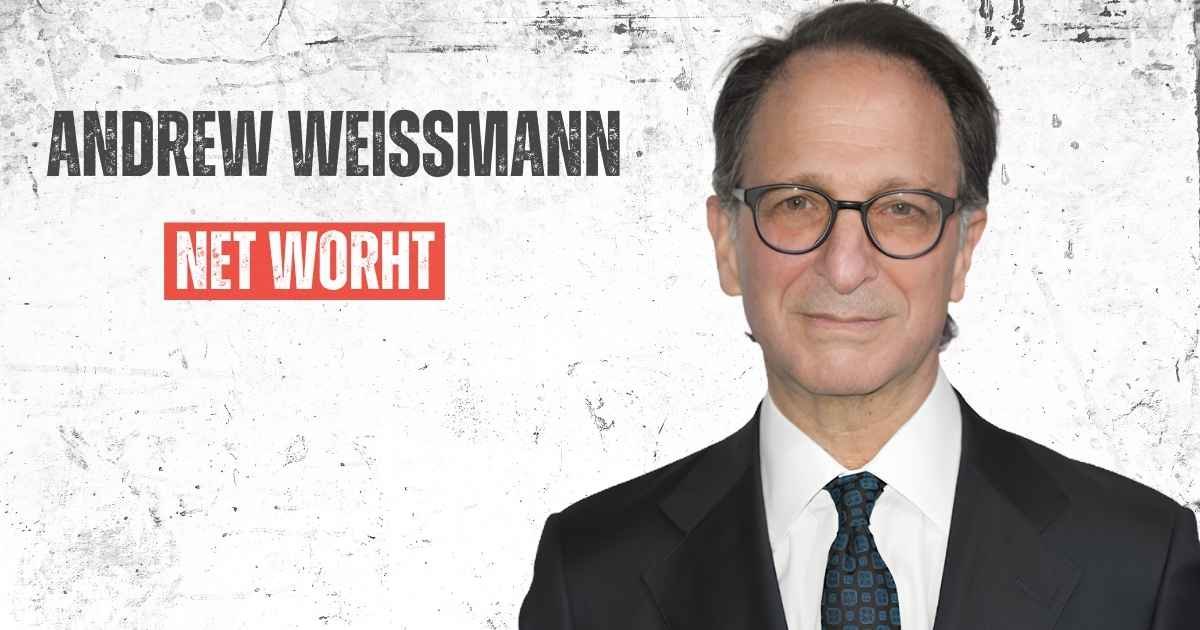

Few American attorneys have operated at the level Andrew Weissmann has. From dismantling the Gambino crime family to sitting at the center of the Mueller Special Counsel investigation into Russian election interference, Weissmann has spent decades at the sharp edge of U.S. law.
His Andrew Weissmann net worth, estimated between $3 million and $10 million, reflects not just his earnings but the decades of professional credibility he built inside the most demanding courtrooms in the country.
Andrew Weissmann Net Worth
As of 2026, Andrew Weissmann net worth at around $3 million and $10 million, though some sources put the figure considerably higher. The wide range exists for a straightforward reason: his net worth is not publicly disclosed through any verified source, and the gap between his government-era income and his private-practice earnings makes a precise figure difficult to pin down.
What we do know is how his wealth was built. His income flows from several streams:
| Income Source | Estimated Contribution |
| Federal government salary (DOJ, FBI) | Moderate, capped by pay scale |
| Private practice at Jenner & Block | Significant, performance-based |
| NYU School of Law professorship | $150,000 to $250,000 annually |
| MSNBC legal analyst role | Additional ongoing income |
| Book advances and royalties | Meaningful upside, especially post-Mueller |
| Speaking engagements and podcast | Growing revenue stream |
He spent a large portion of his career in government roles, which typically offer lower salaries than private-sector work. However, those roles built his reputation, which later opened doors to significantly higher-paying opportunities. That is the Weissmann financial model in a sentence: invest decades in credibility, monetize it through private practice and media.
Early Life and Education
Andrew A. Weissmann was born on March 17, 1958, in New York City. He grew up there, attending the Ethical Culture Fieldston School. He later attended Princeton University, where he received a Bachelor of Arts degree in 1980. After earning a Fulbright scholarship to the University of Geneva, he received his Juris Doctor from Columbia Law School in 1984.
That is an elite academic foundation by any standard. Princeton. Geneva on a competitive Fulbright fellowship. Columbia Law. Each institution sharpened a different dimension of his thinking, combining rigorous analytical training with international legal exposure. He then clerked for Judge Eugene Nickerson in the United States District Court for the Eastern District of New York, which gave him front-row access to federal litigation before he ever argued a case himself.
Early Legal Career
In 1991, Weissmann became an Assistant U.S. Attorney in the Eastern District of New York, where he remained until 2002. During that time, he tried more than 25 cases, some of which involved members of the Genovese, Colombo, and Gambino crime families. He led the prosecution team in the Vincent Gigante case, resulting in Gigante’s conviction.
That is not a slow start. Taking on the heads of New York’s most powerful organized crime operations in your first federal role signals something about your constitution as a prosecutor. Weissmann thrived under that pressure. He eventually rose to serve as Chief of the Criminal Division within the Eastern District, a remarkable position for someone who had initially joined as a junior attorney.
These early years as a federal prosecutor defined his style: methodical preparation, aggressive courtroom posture, and a willingness to pursue convictions that others might consider too risky.
Federal Prosecutor Years
Eleven years at EDNY is not a stepping stone. It is a full career for most attorneys. Weissmann used that time to master white-collar crime prosecution from the ground up, building a specialty that distinguished him from the average criminal lawyer. He wasn’t just trying cases. He was becoming one of the most knowledgeable federal criminal attorneys in the country.
His work on organized crime cases taught him something that would define his later career: complex conspiracies leave paper trails. Follow the money, map the relationships, and the case builds itself. That philosophy transferred directly to corporate fraud.
The Enron Task Force
In 2002, President George W. Bush appointed Weissmann as deputy director, and later director, of the FBI’s Enron Task Force. His work resulted in the prosecution of more than 30 people for crimes including perjury, fraud, and obstruction, including three of Enron’s top executives: Andrew Fastow, Kenneth Lay, and Jeffrey Skilling.
Think about the scale of that. Enron was not a routine corporate fraud case. It was the largest accounting scandal in American history at that time, wiping out thousands of employees’ retirement savings overnight. Weissmann stepped into the center of that storm and delivered prosecutions that sent shock waves through corporate America.
He also argued, controversially, that auditing firm Arthur Andersen LLP had covered up for Enron. He argued for the judge to instruct the jury that they could convict the firm regardless of whether its employees knew they were violating the law. This ruling was later overturned by the Supreme Court. Weissmann was characterized as a “pitbull” by The New York Times during the Enron prosecution, with observers noting his hard-nosed tactics and aggressive approach. That nickname stuck.
Read More: Stray Kids Net Worth 2026 (Updated Wealth, Members Earnings & Income Breakdown)
Senior Department of Justice Roles
After Enron, Weissmann cycled between public service and private practice at Jenner & Block. In 2011, he returned to the FBI, serving as General Counsel under Mueller from 2011 to 2013. This was a very different role from prosecution. As FBI General Counsel, he managed the legal framework of the entire bureau, overseeing compliance, legal risk, and policy across one of the most powerful law enforcement agencies in the world.
From 2015 to 2019, he served as Chief of the Fraud Section in the U.S. Department of Justice. That section handles some of the most sophisticated financial crime in America. Running it requires equal parts legal mastery and administrative leadership.
The Mueller Special Counsel Investigation
On June 19, 2017, Weissmann joined Special Counsel Robert Mueller’s team to investigate Russian interference in the 2016 United States elections. It was his most visible appointment yet. The Russia investigation dominated U.S. headlines for nearly two years.
He was described as the architect of the case against former Trump campaign chairman Paul Manafort. Manafort’s prosecution on tax and bank fraud charges produced guilty pleas and a cooperation agreement, making it one of the Mueller investigation’s most tangible outputs.
Weissmann’s role drew intense scrutiny from both sides of the political spectrum. Supporters pointed to the meticulous legal work the team produced. Critics accused the investigation of overreach. What’s undeniable is that his profile as a federal criminal attorney grew enormously through this period. The Russia investigation and his work in federal investigations became the defining chapter of his professional biography.
Academic and Media Career
Weissmann currently serves as a Professor of Practice at NYU School of Law, where he teaches courses in criminal law, criminal procedure, national security law, and business crimes. He has also taught at Fordham Law School and Brooklyn Law School.
Teaching at NYU is not a post-retirement hobby. Weissmann brings real-world federal prosecution experience into the classroom, giving students a perspective on criminal procedure that no textbook replicates. That combination of courtroom depth and academic rigor makes him a rare asset in legal education.
In 2019, Weissmann joined MSNBC as a legal analyst. His commentary is sharp, specific, and grounded in decades of actual federal experience. That distinguishes him from generalist pundits. Beginning in March 2023, he co-hosted the MSNBC podcast Prosecuting Donald Trump with former prosecutor Mary McCord, which won the Webby Award and People’s Voice Award in the Crime and Justice category at the 2024 Webby Awards.
Books and Public Commentary
Weissmann has produced some of the most credible firsthand accounts of major federal investigations published in recent years. He wrote a memoir about the Mueller investigation titled Where Law Ends: Inside the Mueller Investigation. He also co-authored with Professor Melissa Murray The Trump Indictments: The Historical Charging Documents With Commentary. Both books became New York Times bestsellers.
His latest book, Liar’s Kingdom, was published in May 2026 and reached number one on the NYT, Amazon, and Publisher’s Weekly bestseller lists. Three books. Three different facets of American legal accountability. The publishing track record alone signals that his public voice carries serious commercial weight beyond his legal roles.
He serves on the board of Just Security and writes regularly for The New York Times, The Atlantic, and The Washington Post. These aren’t occasional op-eds. They are consistent contributions to the national conversation on law, democracy, and public accountability.
Personal Life and Family
Andrew Weissmann guards his personal life carefully. For someone who appears on national television weekly and writes for major publications, the discipline he applies to keeping his family private is notable.
Wife and Son
Weissmann is married to Deborah M. Weissmann, a distinguished legal academic. Her research spans law and political economy, migration and immigration, human rights, and gender violence. She has written numerous articles, essays, and book chapters on these topics, published in journals including the Boston College Law Review and the Columbia Human Rights Journal.
She has been honored with the ACLU’s Frank Porter Graham Award for her contributions to civil rights. Since 1998, she has been a member of the Carolina Law Faculty, holding the position of the Reef C. Ivey II Distinguished Professor of Law.
The couple has one son, Benjamin Weissmann, who graduated from Harvard Law School. Ben followed both parents into the law, which says something about the household he grew up in.
Height and Physical Appearance
Andrew Weissmann stands at approximately 5 feet 8 inches tall and maintains a body weight of around 70 kilograms. On television, he projects the calm, measured presence of someone who has spent decades in high-pressure courtrooms. His appearance is understated and professional, consistent with his reputation as someone who lets legal argument do the talking.
Lifestyle and Personality
Weissmann doesn’t court celebrity. He courts influence. Those aren’t the same thing. He operates through institutions, whether the DOJ, NYU, MSNBC, or major publications, rather than through personal brand-building for its own sake.
Colleagues consistently describe him as relentlessly prepared. The pitbull label from the Enron era isn’t just about aggression. It’s about refusal to let go of a legal theory until every angle has been explored. Outside the professional sphere, Weissmann keeps a low profile, living in New York with his family and maintaining the kind of deliberate privacy that most public figures would struggle to preserve.
Social Media and Public Presence
Weissmann co-hosts a podcast called Main Justice with Mary McCord following Trump’s second election and maintains an active Substack newsletter called Behind The Headlines. His social media presence, particularly on X (formerly Twitter), is focused on legal commentary, DOJ accountability, and national security matters. He doesn’t perform on social media. He informs.
Notable Achievements
- Prosecuted members of the Genovese, Colombo, and Gambino crime families as an Assistant U.S. Attorney
- Secured convictions of more than 30 individuals as director of the Enron Task Force
- Served as FBI General Counsel under Robert Mueller
- Led the DOJ Criminal Fraud Section from 2015 to 2019
- Served as senior lead prosecutor in the Mueller Special Counsel investigation
- Prosecuted Paul Manafort in one of the Mueller probe’s landmark cases
- Published three books, two of which were NYT bestsellers; a third debuted at number one
- Won the Webby Award for the podcast Prosecuting Donald Trump
- Currently serves as Professor of Practice at NYU School of Law
Fun Facts
- Weissmann earned a Fulbright scholarship before law school, a credential most attorneys never hold
- The New York Times called him a pitbull during Enron, a nickname that has followed him ever since
- His son Benjamin graduated from Harvard Law School, making the Weissmanns a three-lawyer household
- He co-hosts two separate podcasts on American legal accountability
- He has prosecuted members of organized crime and the chairman of a presidential campaign in the same career
- His 2026 book Liar’s Kingdom hit number one on three major bestseller lists simultaneously
FAQs
What is Andrew Weissmann net worth in 2026?
Andrew Weissmann net worth is estimated between $3 million and $10 million in 2026.
Who is Andrew Weissmann wife?
Andrew Weissmann is married to Deborah M. Weissmann, a distinguished law professor at Carolina Law.
What is Andrew Weissmann most famous for professionally?
He is best known for leading the Enron Task Force and serving on Mueller’s Special Counsel team.
Where did Andrew Weissmann go to school for his education?
He attended Princeton University and earned his law degree from Columbia Law School in 1984.
Does Andrew Weissmann have a son and what does he do?
Yes, his son Benjamin Weissmann graduated from Harvard Law School and pursued a legal career.
Conclusion
Andrew Weissmann’s career is a study in what happens when elite credentials meet relentless execution across decades. From organized crime prosecutions in New York to the center of the Mueller investigation into Russian election interference, he has operated at the highest level of American federal law.
His Andrew Weissmann net worth, ranging in estimates from $3 million to $10 million, understates the broader influence he commands as a legal analyst, NYU professor, bestselling author, and public voice on criminal justice in America.

Hi, I’m Admin the creative force behind a hub for unique and meaningful names, usernames, and identity ideas. I love helping people discover inspiring, clever, and standout name concepts for gaming, teams, characters, and personal branding.